See the review gate in one minute.
One question goes in. A small panel reviews product value, engineering readiness, risk, and user clarity. The output is a practical ship, revise, or reject decision.
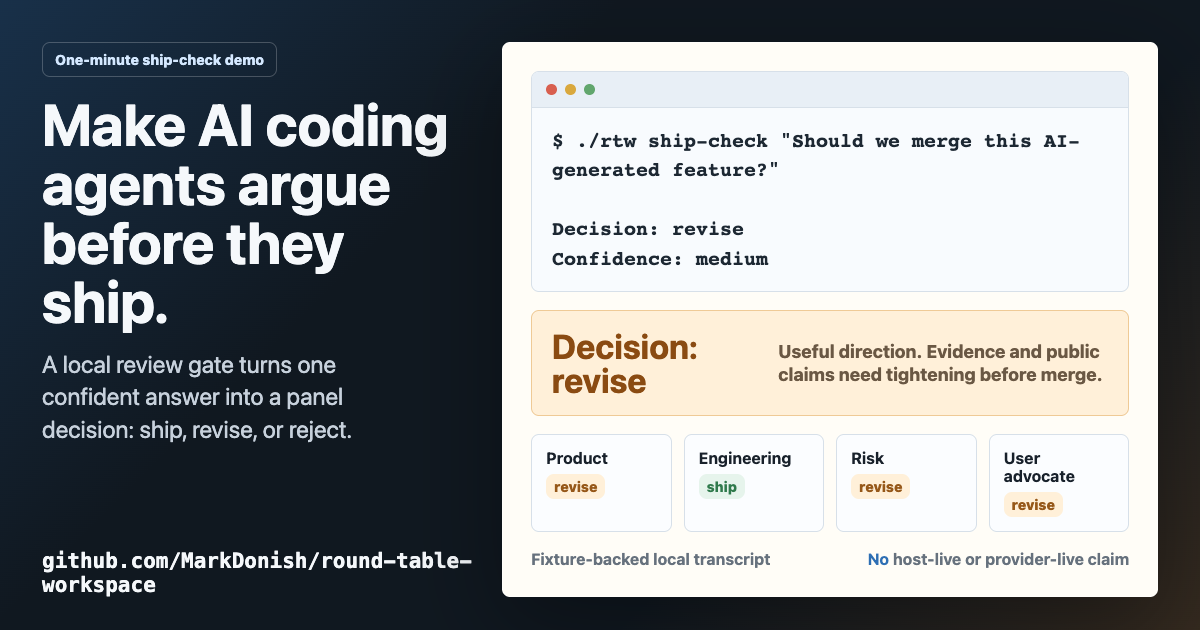
Before one confident AI answer becomes trusted work, run a local review gate.
$ ./rtw ship-check "Should we merge this AI-generated feature?"

Decision: revise
Confidence: medium

Panel:
- product: revise
- engineering: ship
- risk: revise
- user-advocate: reviseSummary
Useful enough to continue, but revise positioning, evidence, and user-facing examples before claiming it is launch-ready.
Product
The user value should be stated as an observable outcome before shipping.
Engineering
The change is small enough to ship when tests and local validation pass.
Risk
Claim boundaries and rollback notes should be explicit before launch copy is promoted.
User advocate
The public README should show a concrete before/after example, not only architecture language.
It catches
Unsupported host-live or provider-live claims before they become public launch copy.
It names
Missing evidence, weak positioning, and the exact next step instead of vague approval.
It preserves
A local evidence trail that can be committed, audited, and rerun before merge.
Next:
1. Run ./rtw doctor --quick and the unit test suite.
2. Add one concrete demo transcript or screenshot to the README.
3. Keep public claims local-first unless host-live/provider-live evidence exists.